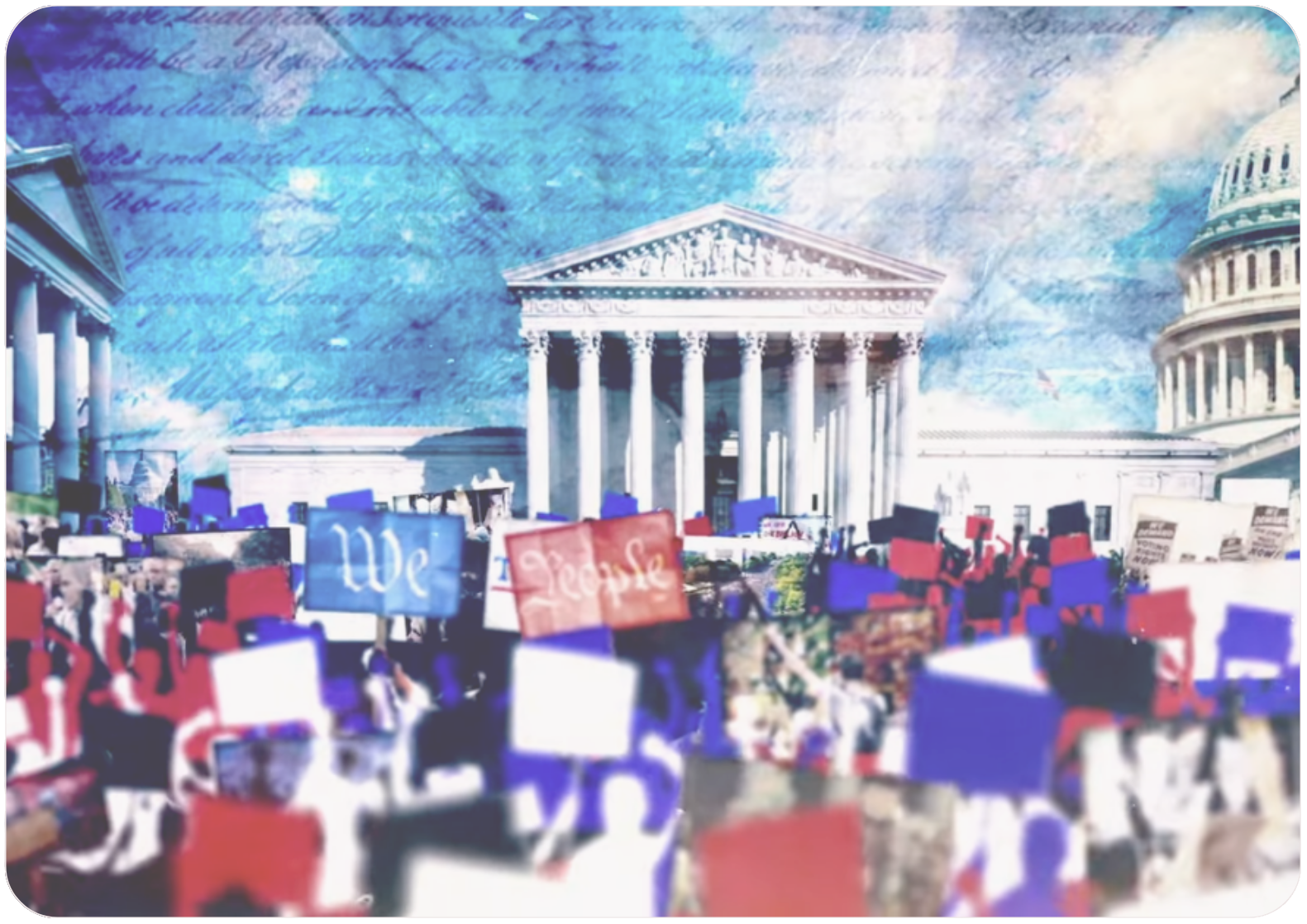
Freedom of the Press is one of the fundamental freedoms in the Bill of Rights and an essential part of a healthy democracy. Explore this important topic and examples of attacks on freedom of the press in our new documentary.
Teaching Elementary Civics
Who Lived Here First?: Introduction to Indigenous Peoples and Land Sovereignty Students will learn about the history of Native Americans as the original inhabitants of North America, understanding that Indigenous peoples lived here long before the United States existed and that their diverse cultures and communities continue to thrive today. Through a read-aloud of “We
High School | Balancing State and Federal Power: The Constitution’s Commerce Clause
This lesson centers on the constitutional and historical themes presented in the Balancing State and Federal Power: The Constitution’s Commerce Clause film. Students investigate how the Commerce Clause in Article I, Section 8 became one of the most significant sources of federal authority and a recurring point of tension between state and national power. The lesson emphasizes:
Congress’s enumerated powers under Article I of the Constitution
The evolving balance between state and federal authority
The role of Supreme Court interpretation in expanding, limiting, and redefining federal power
The ongoing relevance of Commerce Clause debates in a modern, interconnected economy
*Developed by Robyn and Ryan Slay, experienced social studies educators in Georgia.
Middle School | Who Gets to Decide? The Commerce Clause and the Balance of Federal Power
This lesson, based on Balancing State and Federal Power: The Constitution’s Commerce Clause, introduces students to the Commerce Clause as a foundation of federal power and a key source of ongoing debate between state and federal governments. The lesson emphasizes: The basic structure of the U.S. Constitution and Article I How the Constitution divides power between
High School | One Nation, Many States: Investigating the Commerce Clause and the Balance of Power
This lesson centers on the constitutional and historical themes presented in the Balancing State and Federal Power: The Constitution’s Commerce Clause film. Students investigate how the Commerce Clause in Article I, Section 8 became one of the most significant sources of federal authority and a recurring point of tension between state and national power. The lesson emphasizes:
Congress’s enumerated powers under Article I of the Constitution
The evolving balance between state and federal authority
The role of Supreme Court interpretation in expanding, limiting, and redefining federal power
The ongoing relevance of Commerce Clause debates in a modern, interconnected economy
*Developed by Robyn and Ryan Slay, experienced social studies educators in Georgia.
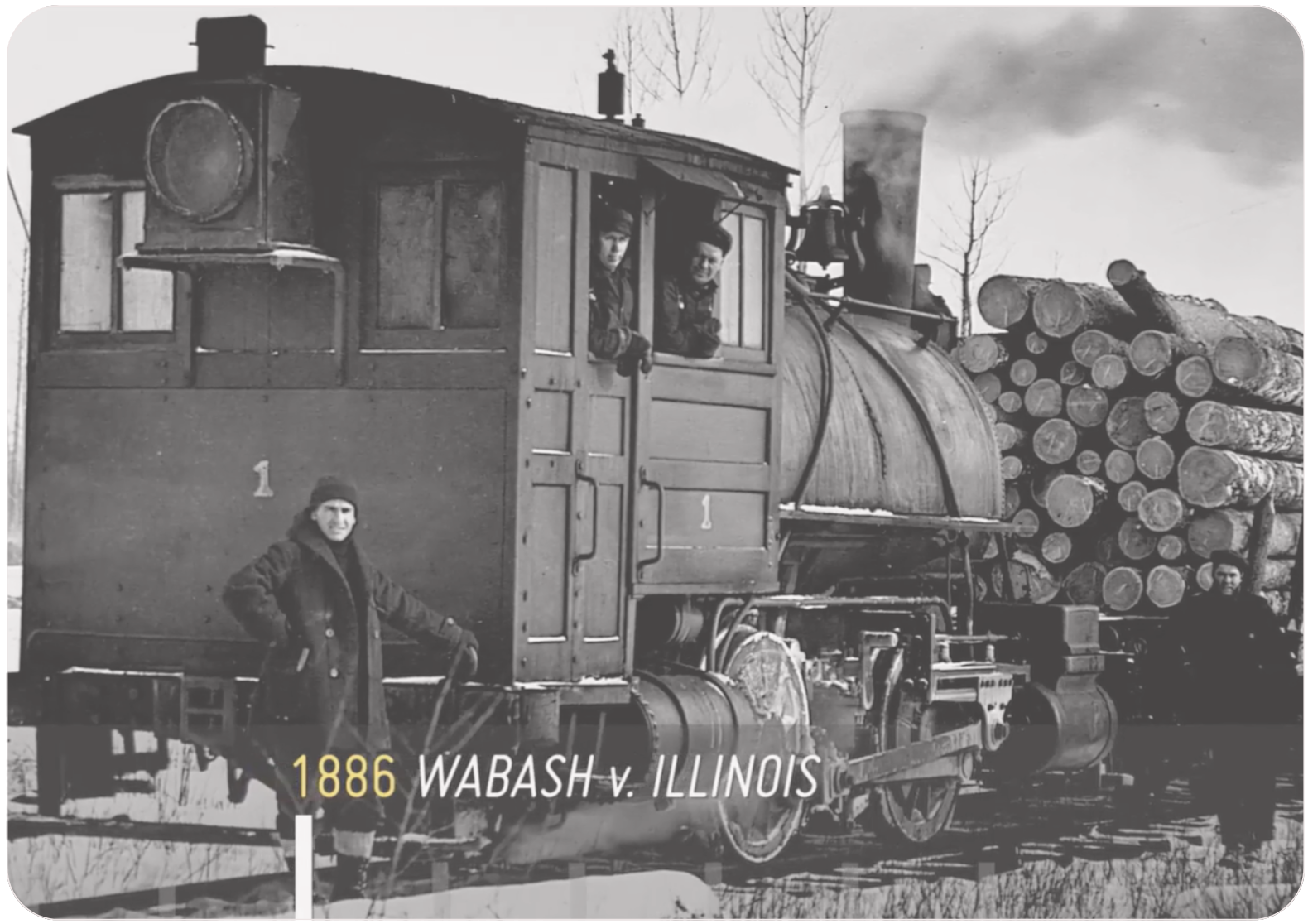
Balancing State and Federal Power: The Constitution’s Commerce Clause
How do we balance power between the states and the federal government? This question has shaped American democracy since the Constitutional Convention, when delegates faced the challenge of creating a stronger federal system while preserving state authority. This film explores the Constitution’s Commerce Clause found in Article 1, Section 8, which grants Congress the power “to regulate commerce…among the several states” and examines its historical context and ongoing impact.
High School | The 8th Amendment: Cruel and Unusual Punishment
This high school lesson, based on The Eighth Amendment: Cruel and Unusual Punishment film, examines whether evolving standards of decency should apply equally to juveniles and adults in the criminal justice system. Students will explore key constitutional themes, including the Bill of Rights, the Eighth Amendment, and judicial review, while analyzing how Supreme Court rulings shape laws and punishments.
High School | Cruel and Unusual? Rethinking Juvenile Justice Through Constitutional Lenses of Fairness, Justice, and Evolving Perspectives
In this unit, based on The Eighth Amendment: Cruel and Unusual Punishment film, students will explore the changing interpretation of the 8th Amendment, and the phrase “cruel and unusual punishment”. Students will analyze multiple primary and secondary source documents, to understand historical context and current stakeholder perspectives on the juvenile justice system. Finally, students will use the concepts of ‘fairness’ and ‘justice’, to make amendments to the current Juvenile system in their state of residence, supported by precedent, evidence, and analysis.
High School | Cruel and Unusual Punishment Lesson – Inquiry Design Model
This high school lesson plan, based on The Eighth Amendment: Cruel and Unusual Punishment film, engages students in exploring the concept of cruel and unusual punishment. Students will begin by brainstorming a list of punishments they believe fit this definition and explaining their reasoning. They will then analyze images of various punishment methods to determine whether they meet the constitutional standard. The lesson is largely student-driven, encouraging critical thinking as students examine the nature of punishment and take a position on whether the death penalty should be maintained or abolished.
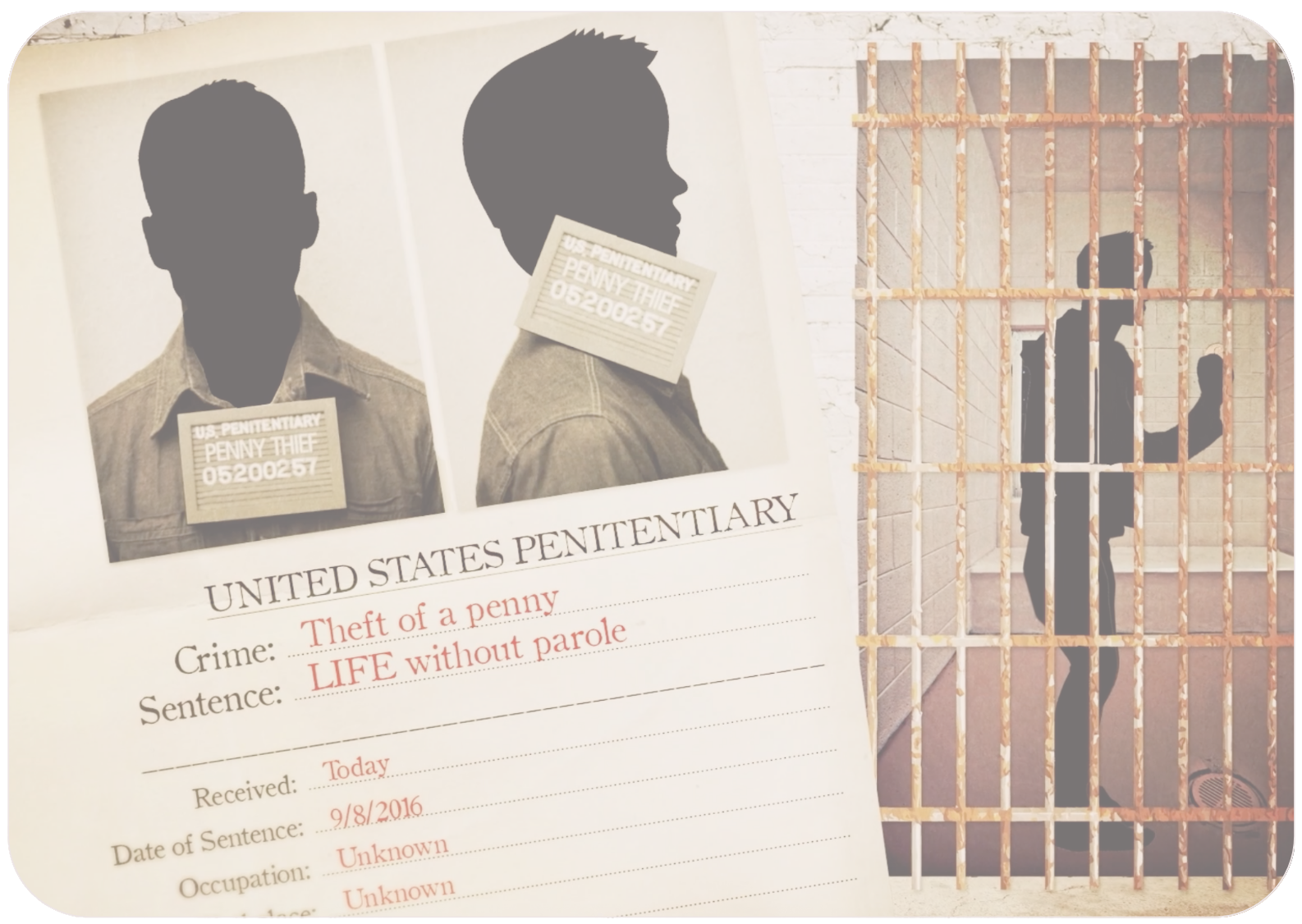
The Eighth Amendment: Cruel and Unusual Punishment
The Eighth Amendment to the Constitution protects against “cruel and unusual punishment” for those convicted of crimes. But what makes a punishment cruel or unusual? Who decides, and how? This film explores the concept of “evolving standards of decency,” specifically as it applies to the death penalty for juvenile offenders.
The Press, Political Power and Protest: Examining New York Times v Sullivan
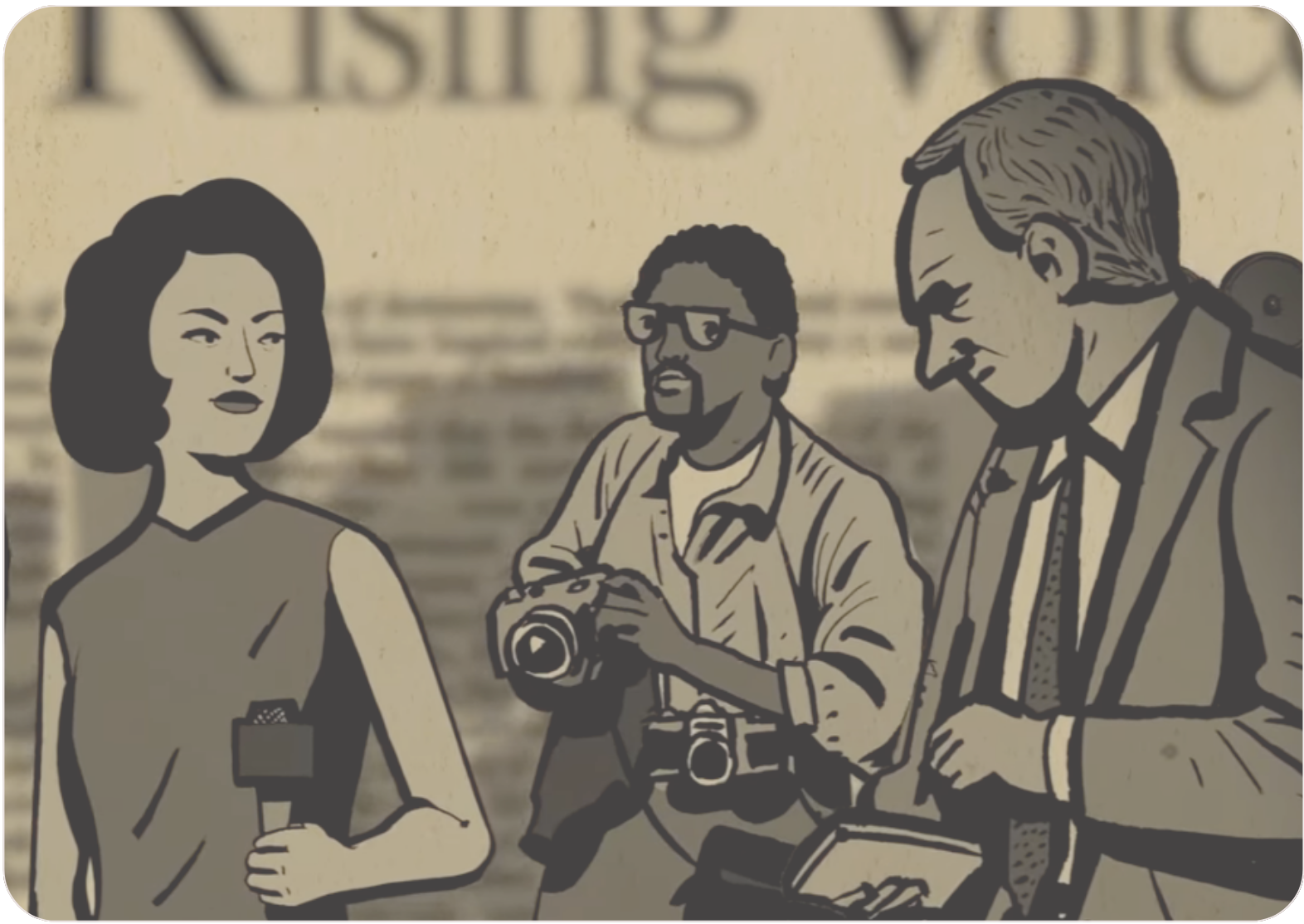
This high school lesson plan uses the New York Times v Sullivan film as a foundation for examining the Civil Rights Movement, Freedom of the Press, and the First Amendment. Students will compare front page headlines during that time, read an Eleanor Roosevelt newspaper column as well as an excerpt from Supreme Court Justice Louis Brandeis, and analyze the “Heed Their Rising Voices” ad to understand the issues of the era, assess the free press’s role and impact on society, and evaluate the rights and responsibilities of citizenship that come with freedom of the press.
New York Times Company v Sullivan: The Civil Rights Movement and Freedom of the Press
This middle school lesson plan focuses on the essential role of freedom of the press in a democracy, the importance of the press in the success of the Civil Rights Movement, and the contemporary challenges to freedom of the press and civil rights. Students will use the film and primary source resources including an excerpt from Governor George Wallace’s inaugural address promoting segregation, an excerpt of the Supreme Court decision in NY Times v Sullivan written by Justice William Brennan, and the “Heed Their Rising Voices” ad to analyze this important moment in First Amendment history.
Documenting the Civil Rights Movement: How the Free Press Changed America
This high school lesson plan provides students with opportunities to learn about the Civil Rights Movement through the prism of freedom of the press using actual events and hypotheticals. Students will use the Frayer Model to analyze images from the Civil Rights Movement and the “Heed Their Rising Voices” ad in the NY Times v Sullivan case to examine the role of the press in creating an informed citizenry and their contributions towards the health of democracy. The lesson plan also includes an AP U.S. Government and Politics extension activity comparing Supreme Court decisions.
First Amendment: New York Times v. Sullivan
This film examines freedom of the press, an essential First Amendment right, through the key Supreme Court Case New York Times v. Sullivan. It traces the relationship of the press to the Civil Rights movement of the 1960’s, and the ways in which proponents of segregation tried to use libel claims via the courts to prevent coverage of the violence inflicted upon peaceful protestors.
The Significance of Juneteenth in American History
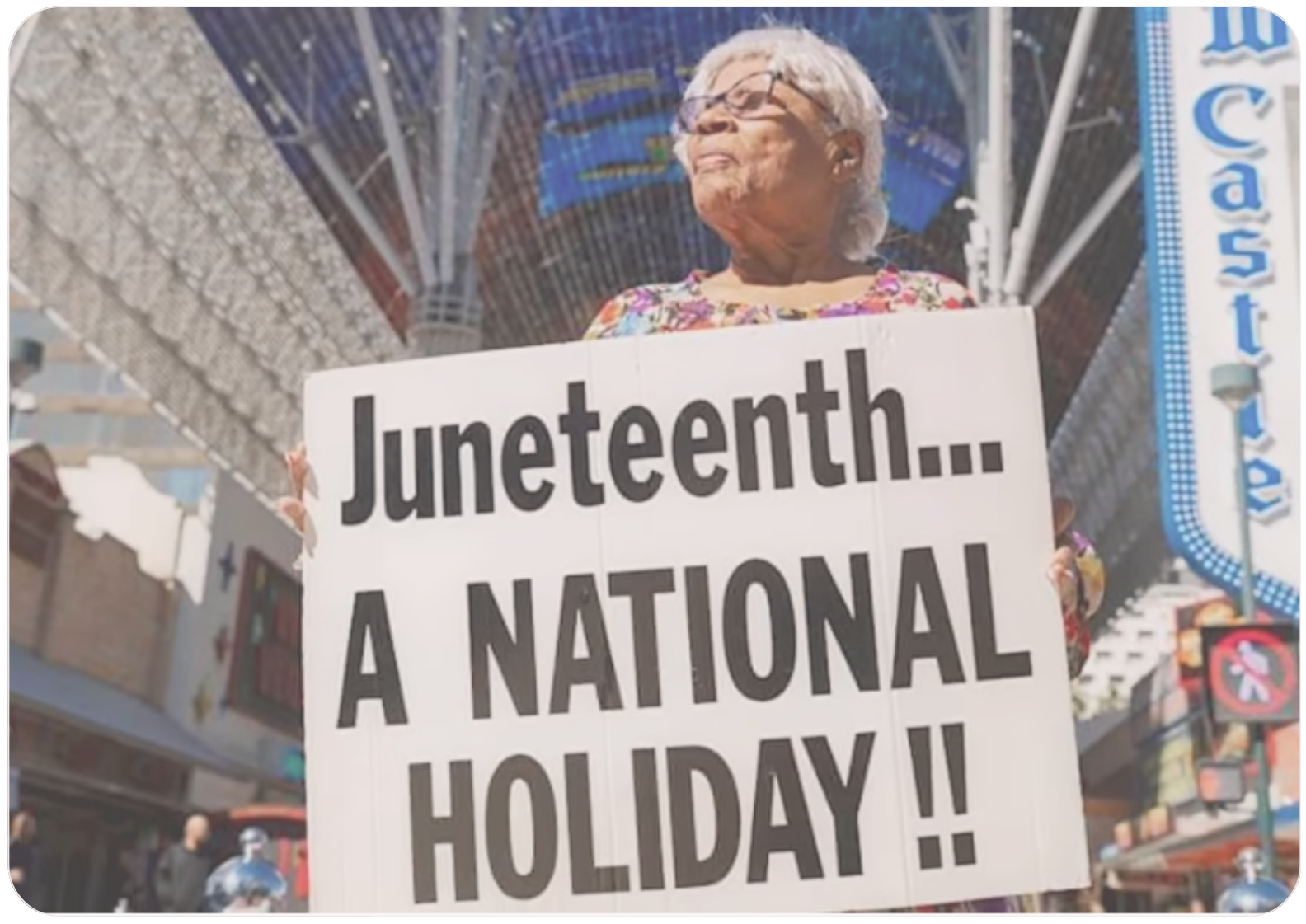
This middle school lesson plan is designed to accompany the film “Juneteenth” and focuses on the themes of freedom and citizenship. Students will explore the events that led up to the issuance of General Order #3, while considering the relationship between freedom and citizenship, and why Juneteenth is significant for all Americans.
Juneteenth: The Work and Promise of Freedom
This middle school lesson plan is designed to accompany the film “Juneteenth” and focuses on the themes of freedom – personal, economic, social, and political freedom – and self-determination. Students will examine how African American people worked to win freedom, how some Americans tried to take that freedom away, and how citizens can protect freedom today. Students will also identify the promise of Juneteenth and consider if that promise has been achieved.
Battle for Emancipation and Full Citizenship: A Journey from Dred Scott to the 15th Amendment
This high school lesson plan is designed to accompany the film “Juneteenth” and encourages students to consider the connections between historical events before, during and after the Civil War that charted the course to citizenship for enslaved people in the United States. Students will also examine societal reactions to the emancipation of enslaved people and how the resulting conflicts necessitated the need for the three Reconstruction Amendments.
Juneteenth: Exploring Freedom’s Stories
What is the story of Juneteenth? Why do we celebrate this newly designated federal holiday, and how is it connected to one of the most cherished American ideals: freedom? This film explores the history of Juneteenth and illustrates how the Reconstruction Amendments to the Constitution expanded the definition of citizenship and rights for all Americans.
Striking a Balance on Student Free Speech
This lesson will encourage students to investigate Supreme Court cases in conjunction with the Annenberg Classroom video “First Amendment: Student Freedom of Speech” to evaluate the decisions handed down by the Court in the effort to find the balance between a school’s need for order and a student’s right to expression. Students will explore five Supreme Court cases with the purpose of determining if the Court’s decisions helped or hindered defining “protected speech” for students in public school environments.
First Amendment: Student Freedom of Speech
The First Amendment’s right to free speech is one of our most important rights as citizens. But what does freedom of speech mean for students in public schools? How do you balance a school’s need for order with a student’s right to free expression? This film explores the evolution of student free speech rights through Supreme Court cases, from Tinker v. Des Moines to Mahanoy Area School District v. B.L., the case of the Snapchatting cheerleader.

Second Amendment: Why Is It Controversial?
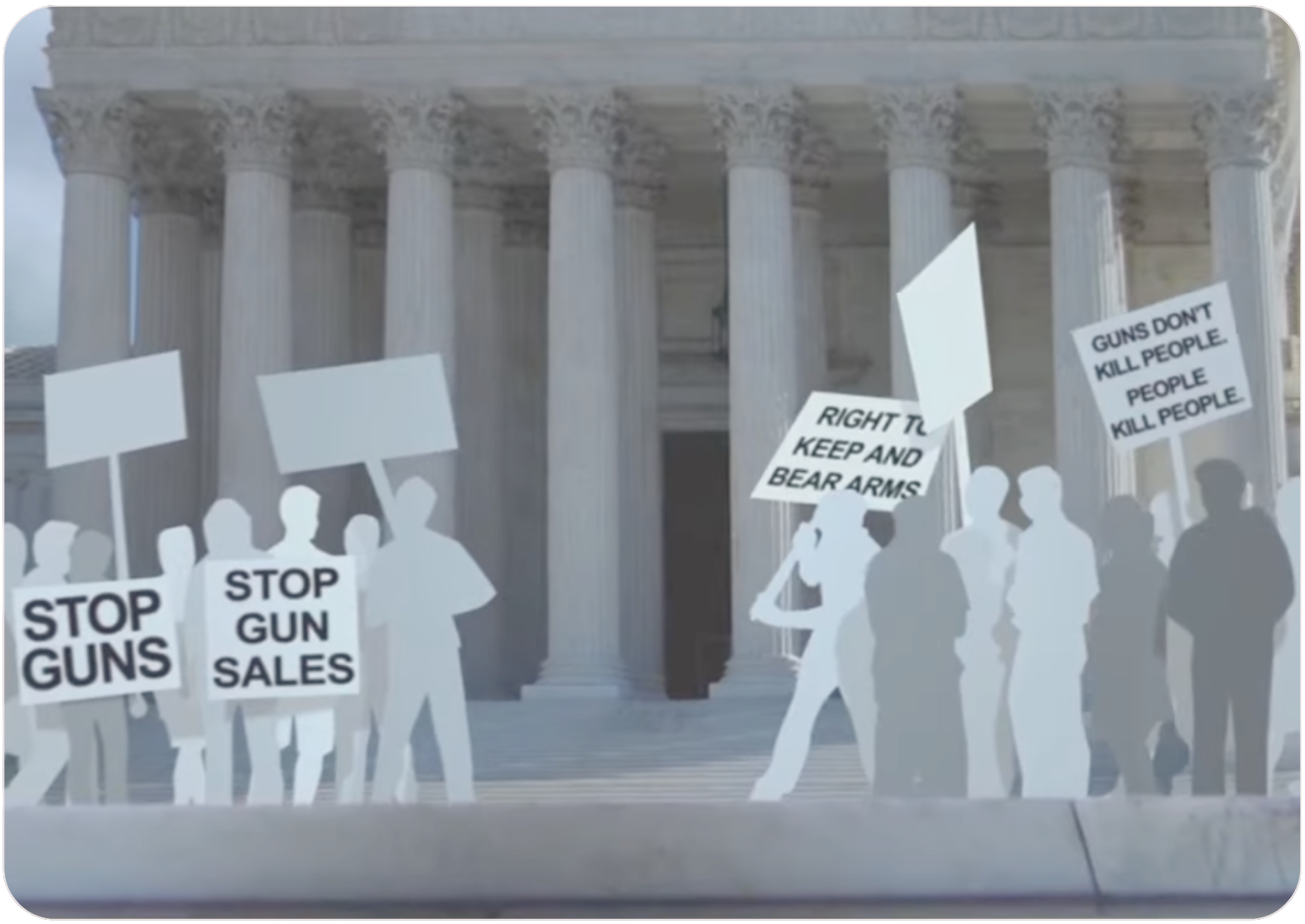
This lesson will engage students in the history of the Second Amendment and how its meaning and importance have changed over time. Students will examine various eras in U.S. history that shaped the debate: the American Revolution; the Civil War and Reconstruction; the 1930s and Prohibition; the assassinations in the 1960s; and the Supreme Court decisions in D.C. v. Heller (2008) and McDonald v. Chicago (2010). Finally, students will be challenged to rewrite the amendment to make it more accessible to the world today.
Second Amendment: D.C. v. Heller and McDonald v. Chicago
This film examines the history of guns and gun ownership in our society from the Revolutionary War to modern times and the complicated debate over what the founders intended when they wrote the Second Amendment. Does it protect a right of individuals to keep and bear arms? Or is it a right that can be exercised only through militia organizations like the National Guard?
Freedom of Assembly: The Right to Protest
This lesson will focus on freedom of assembly, as found in the First Amendment. Students will consider the importance of the right to assemble and protest by analyzing cases where First Amendment rights were in question. Using the case National Socialist Party of America v. Village of Skokie, students will consider if the government is ever allowed to control the ability to express ideas in public because viewpoints are controversial, offensive, or painful. Students will use primary sources and Supreme Court cases to consider whether the courts made the correct decision in the National Socialist Party v. Skokie case. Students will be able to form an opinion on the essential question: Is the government ever justified to restrict the freedom to assemble?
Teaching Critical Thinking by Asking: Could Lincoln Be Elected Today?
This lesson plan uses a video series called “Could Lincoln Be Re-elected Today?” from a political literacy project of the Annenberg Public Policy Center of the University of Pennsylvania. The videos imagine political ads from the 1864 Lincoln v. McClellan presidential campaign using modern-day tactics. The lesson incorporates the videos to help classes recognize flaws in arguments in general and political ads in particular and to examine the criteria for evaluating candidates, past and present, for the presidency.
Freedom of Assembly: National Socialist Party v. Skokie
This film explores the First Amendment right of the “people peaceably to assemble” through the lens of the U.S. Supreme Court case National Socialist Party of America v. Village of Skokie. The legal fight between neo-Nazis and Holocaust survivors over a planned march in a predominantly Jewish community led to a ruling that said the neo-Nazis could not be banned from marching peacefully because of the content of their message.